
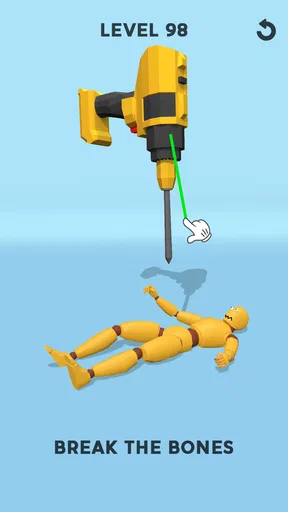
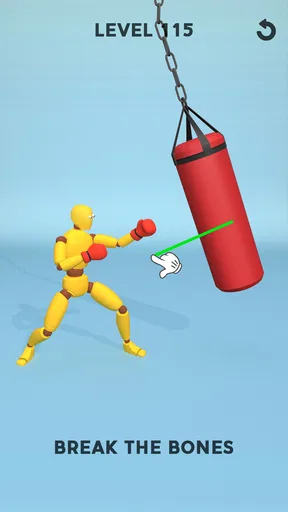
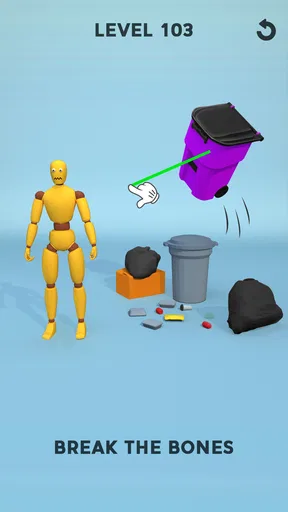
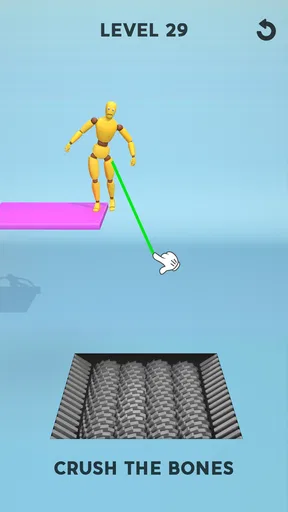
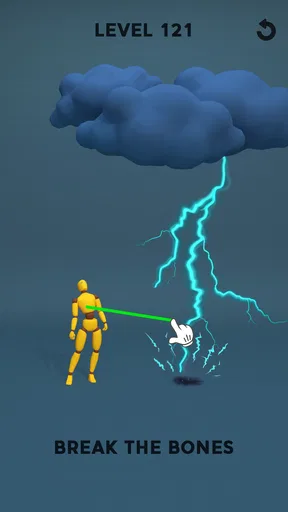
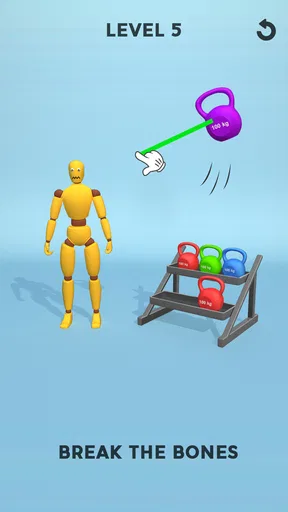

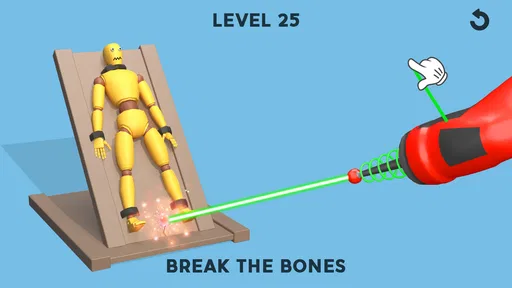
Kick & Break The Ragdoll Games review
 Analysis by GetAllApps
I judge a casual game not just by whether it fills a spare minute, but by how much effort it asks from the person playing. Kick & Break The Ragdoll Games has a deliberately simple premise: interact with a ragdoll and watch it react. That makes it easy to understand at a glance, but simplicity is not the same as being comfortable for every player. My main takeaway is that this is best approached as a brief, low-commitment simulation for people who enjoy playful, physical cause and effect—not as a deep game or a dependable stress-management tool.
How easy is it to read and navigate?
The central idea needs little explanation. You are not being asked to follow a complicated plot or learn a long sequence of rules before you can begin. For someone who wants a game they can pick up without first studying instructions, that directness is a real advantage. The title itself sets the expectation: the fun comes from acting on a ragdoll and seeing what happens.
That clarity also gives the game a narrow focus. The appeal depends on whether you find ragdoll reactions entertaining; there is no need to pretend that the concept offers the varied goals of a puzzle adventure or the long-term planning of a management simulation. I would choose it when I want an immediately legible interaction, not when I want a game that gradually teaches a complicated system.
The familiar phone-game format should be approachable for many people, but ease of understanding and ease of operation are different questions. A player can understand the objective while still finding touch controls awkward, especially if precise movement or repeated input is uncomfortable. If that distinction matters to you, I would treat the simplest interaction as the main reason to try it and avoid assuming that a straightforward premise guarantees effortless play.
There is also a practical way to judge whether the presentation suits you: try a short session and notice whether you can comfortably identify what to do without concentrating on the screen for too long. If the basic action is clear and the visual motion is pleasant, the game may work as a casual diversion. If you find yourself searching for what to do next or struggling to follow the action, its limited premise may not provide enough reason to persist.
Touch, motion, and sensory comfort
A ragdoll game makes movement and physical reactions part of the entertainment. That can be satisfying if you enjoy watching an exaggerated response to an action, and it gives the game a different feel from a word puzzle or a quiet strategy game. But the same emphasis may be tiring for someone who is sensitive to repeated motion, busy visual action, or the general intensity of physical comedy.
I would not use it as a universal recommendation for sensory relaxation. The store summary frames the game as stress relief, yet an experience that feels amusing and releasing to one person can feel noisy or overstimulating to another. If you are easily unsettled by animated impacts or fast-changing scenes, keep the first session brief and decide based on your own reaction. A calmer puzzle, a static logic game, or a gentle creative app may be a better fit when visual quiet is the priority.
Touch interaction also creates a trade-off for people with limited dexterity, hand fatigue, or difficulty making repeated gestures. A compact, direct game can be less demanding than a title with many menus and layered controls, but repeated tapping or dragging can still become a barrier. I would try it when your hands feel comfortable rather than treating it as a guaranteed option for limited-mobility play. If an interaction starts to feel uncomfortable, stopping is a better choice than pushing through for the sake of a score or routine.
One useful way to make the experience more manageable is to set a small personal stopping point before you begin: a few minutes, a short break, or simply one casual visit. That keeps the game in the role of a quick diversion instead of turning an easygoing activity into a repetitive task. It is a practical approach for anyone who enjoys the concept but wants to limit screen time, hand strain, or sensory load.
Where it fits into an ordinary day
I can see this working during a short wait, such as sitting down before an appointment or taking a break between chores. The simple premise means you do not need to reserve a quiet hour or remember a complex objective. A quick session can be enough to decide whether the ragdoll humor makes you smile, and you can return to what you were doing without having invested in a long story.
That same use case has limits. If you are in a place where movement on screen would be distracting, or where you need to keep your attention on people around you, this is not the kind of activity I would recommend opening. It is a game to enjoy when you can look at the display and focus on the interaction. For a commute where you need to stay aware of your surroundings, an audio-first activity or a game that can be played with minimal visual attention would be a safer, more practical choice.
For a family setting, the Everyone age rating makes the intended audience broadly accessible, but it does not mean every child will enjoy the same style of humor or action. I would still make the decision based on the child’s preferences and comfort with animated physical comedy. It may suit someone who likes simple, silly interactions; a child looking for a guided story, cooperative play, or a learning activity should be offered something designed around those needs instead.
The game is free, which lowers the commitment involved in trying it. That is useful if you are curious but uncertain whether the concept will hold your attention. I would still treat “free” as a reason to sample it, not as a promise that it will fit every situation or remain entertaining for a long time. The more important question is whether its particular kind of interaction feels enjoyable to you.
What it does well—and where the choice is limited
As a simulation game, it puts the focus on a small, playful interaction rather than on building a world or managing a detailed set of systems. Compared with the usual alternatives in the category, that makes it easier to approach than a serious business or life simulator, but also less suited to players who want decisions to accumulate into a larger plan. If your idea of simulation is experimenting with a convincing system over many sessions, you may be happier with a more involved title.
Against a typical casual puzzle, the difference is equally clear. A puzzle gives you a defined problem to solve and a sense of progress when you find an answer. This ragdoll game is more about the immediate reaction than about methodical deduction. I would reach for it when I want light physical comedy and an easy concept, but choose a puzzle when I want a quieter challenge that rewards patience and sustained attention.
One concrete trade-off is that a narrow central activity can be refreshing at first and repetitive later. If you already enjoy ragdoll humor, the straightforward premise may be enough to make short visits worthwhile. If you need changing objectives to stay engaged, the same directness can leave you wanting more. My advice is to judge it by whether the basic interaction remains amusing after the novelty wears off, rather than expecting it to become a broad simulation.
Another useful distinction is between a quick mood shift and actual stress care. A playful game may give you a moment away from a tedious task, but I would not rely on it to address persistent stress or replace rest, a walk, or support from another person. If the screen feels more stimulating than soothing, close it and choose a quieter break. The best outcome is a little amusement, not pressure to keep playing because the game is supposed to help.
Who may want to try it
I would suggest it to players who like instantly understandable casual games, enjoy animated ragdoll reactions, and are comfortable with touch-based play. It is also a reasonable option for someone browsing simulation games who wants something lighter than a detailed construction or management experience. Its popularity is substantial: it has over 100 million installs, with a 4.6 average from around 353,000 ratings. Those figures show that many players have tried it, though they cannot tell you whether its particular style suits your tastes.
The game is from Game District LLC. It was released on January 14, 2024, and version 11.2.0 is the current version. On Android, the listed minimum requirement is version 7.0. Those details are useful when checking whether it fits your device, but they do not change the central decision: this is a focused, casual ragdoll experience rather than a feature-rich simulation.
I would steer away from it if you dislike slapstick physical reactions, find visual motion uncomfortable, have difficulty with repeated touch input, or want a calm experience that requires little attention to the screen. I would also skip it if you are looking for a substantial story, a clear learning path, or a deep system to master. In those cases, a slower puzzle, an accessible creative tool, or a more structured simulation is likely to be a better match.
An inclusive recommendation with realistic expectations
My recommendation is to try it as a short, optional diversion, not as a one-size-fits-all relaxation game. Its plain premise and casual nature lower the learning barrier, while its reliance on visual reactions and touch means comfort still depends on the player. Start with a brief session, check whether the motion and interaction feel good, and stop if they do not. That simple test is more useful than assuming that a game described as stress relief will feel relaxing to everyone.
For me, its strongest case is a small pocket of downtime when I want an uncomplicated, mildly silly interaction. Its weakest case is any moment when I need quiet, precise accessibility, minimal screen attention, or sustained depth. That balance makes the decision straightforward: if ragdoll comedy sounds fun and touch play is comfortable for you, it is worth a try; if your priorities are calm visuals, low-effort controls, or meaningful long-term progression, another kind of game will serve you better.
Kick & Break The Ragdoll Games is therefore an easy game to sample, but not one I would recommend without qualification. Its broad age rating and free price make trying it simple, while the focused design keeps expectations modest. I would keep it in mind for short breaks, choose a quieter alternative when sensory comfort matters, and let personal comfort—not the promise of stress relief—decide whether it earns a place on your phone.
Pros and cons
Pros
- Simple tap controls make it easy to start playing.
- Short rounds suit quick breaks.
- Ragdoll reactions add a playful touch to each hit.
- A lightweight concept keeps the focus on the action.
- Casual gameplay is accessible to a wide range of players.
Cons
- Repeated kicking and breaking can become monotonous.
- The ragdoll theme may not appeal to everyone.
- Gameplay offers limited depth for experienced players.
- Frequent ads may interrupt play.
- The game may feel repetitive after a short time.


